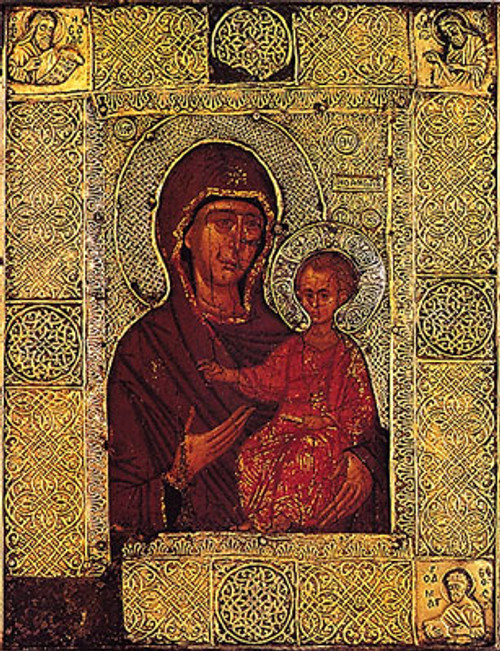
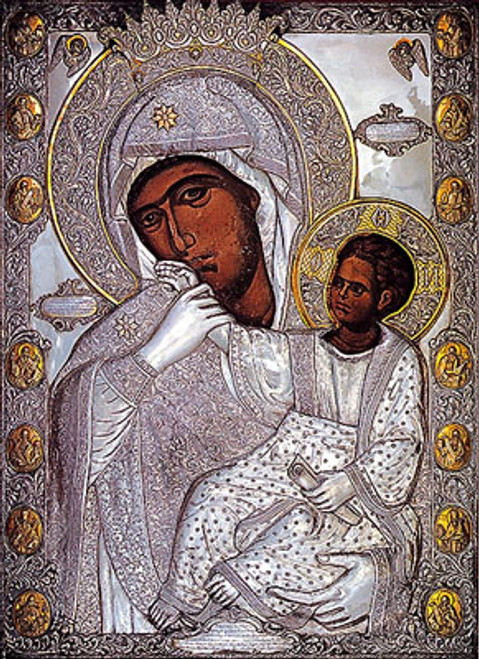
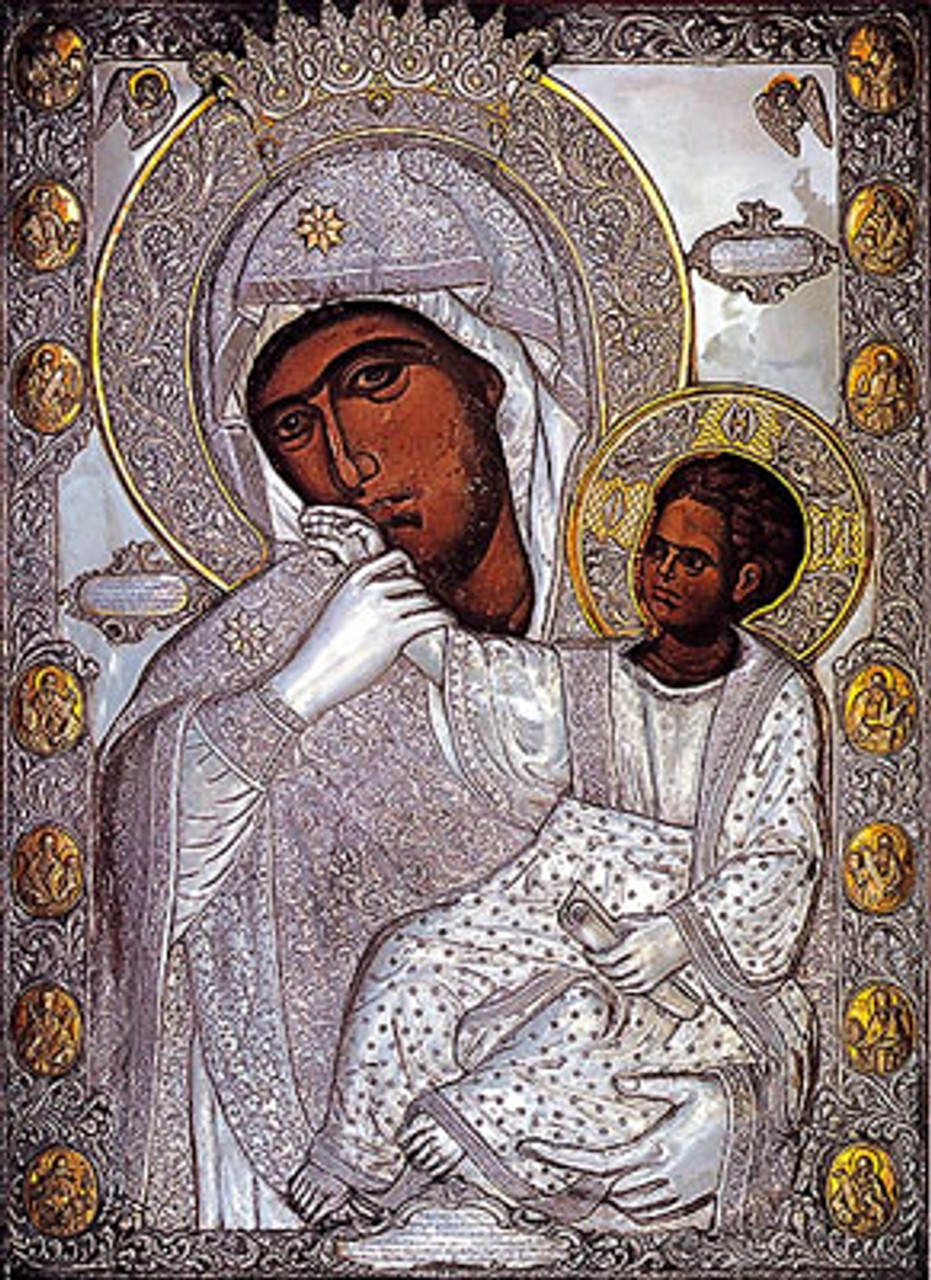
Icon of the Theotokos Paramythia
The revered icon known as Paramythia originates from a fresco in the external narthex of Vatopedi Monastery's main church. Subsequently, it was relocated to a distinct chapel adjacent to the main church, named in her honor. As per the long-standing tradition of the monastery, after the monks leave the main church, the abbot presents the keys of the monastery to the gatekeeper, a ritual that involves the veneration of the sacred icon. On the night of January 21, 1320, as the abbot was in the process of handing over the keys, he heard a voice from the icon warning him against opening the monastery's gate. Instead, the voice advised him to scale the walls to fend off pirates. This warning was uttered twice. When the abbot looked towards the icon, he witnessed a remarkable sight: the Holy Infant's hand stretched out, covering the Theotokos' mouth, seemingly to prevent her from warning the monks, perhaps indicating they should face their fate. However, the Theotokos, moving Christ's hand away from her face, turned to the abbot and reiterated her warning. Alarmed, the abbot alerted the monks, and they swiftly took their positions on the walls. To their astonishment, pirates had encircled the monastery, waiting for an opportune moment to breach its gates. Thanks to the Theotokos' timely intervention, the monastery remained unharmed. In recognition and gratitude for this divine protection, the monks now maintain a perpetual candle lit at the icon and offer prayers daily. An inscription on the silver overlay, crafted in Moldova in 1859, can be found at the bottom.